
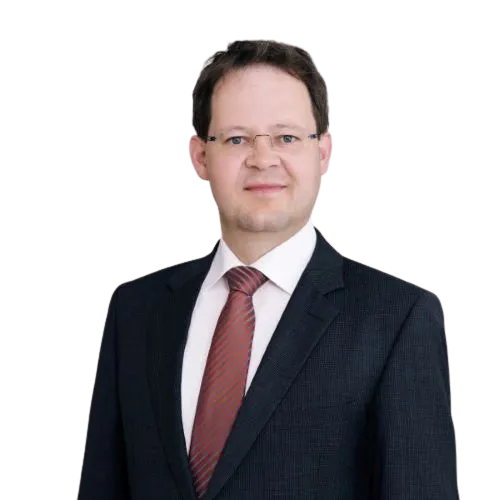
Dr. Ingo Fahrner
Senior managerWith decades of experience in the financial sector, Ingo developed valuation models for trading desks and insurers. Ingo is an expert in solving regulatory requirements and has both the theoretical knowledge and the practical experience to develop and implement the optimal valuation method for trading and risk management alike.

Building the Market Risk System
One of Germany’s largest banks replaced the existing pricing kernel for their market risk system by an in-house development, using the front office pricing library. Moreover, several business processes were included leading to a more concise and simplified set-up and therefore yielded a considerably cost reduction.
Read Article
Differential Geometry, (m,λ)-SABR and a Formula by Pierre-Henry Labordère
Options desks price volatility smiles every day using models that, under the hood, require translating a stochastic process into a usable number: the Black-Scholes implied volatility at each strike and expiry.
Read Article
Modern Logarithms for the Heston Model
Fourier-based pricing is the workhorse for stochastic volatility models. For the Heston model, the standard approach is to express the option price as an integral of the model's characteristic function over the real line, then evaluate that integral numerically.
Read Article
A Strong Invariance Principle for the Logarithmic Average of Sample Maxima
Knowing that a statistic converges is not the same as knowing how it converges. For practitioners who build risk models on extreme value theory, the gap matters enormously. A convergence result tells you that, eventually, the logarithmic average of normalized maxima approaches a theoretical limit.
Read Article
A Flex Engine In Less Than 101 Lines
We present a framework for building a flexible payoff language and linking it to the pricing kernel.
Read Paper
An Extension of the Almost Sure Max–limit Theorem
Extreme events do not cooperate with theory. A model that works on average, across many hypothetical runs, may still give unreliable guidance for the single realized history a firm is actually managing. That gap, between convergence in distribution and convergence along the observed path
Read Article